The life and times of a writer, national speaker, autism consultant, avid home cook, and woman on the autism spectrum. Come inside my world and see what life is like from behind my eyes.
Tuesday, March 8, 2016
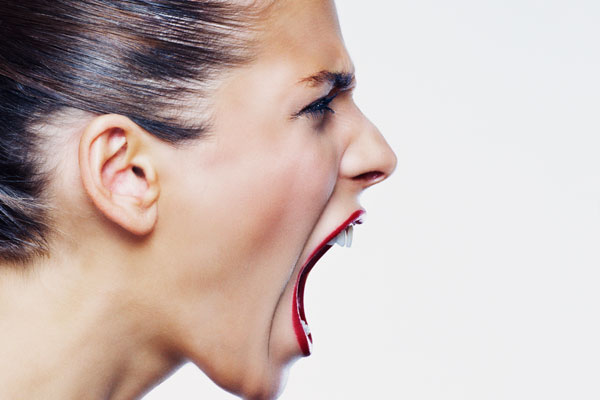
When Nice Girls Get Mad: Thoughts on Women, Autism, and Anger
Not too long ago, I found myself caught in an exchange with someone. I say “caught” because in that moment I felt much like a fish—swimming happily at first; then baited, lured away, and ensnared in the trap that was deliberately laid down for me.
Caught.
Having interacted with this person previously, I knew what was in store if it happened again. Yet despite the thicker skin I’ve grown over the years, I still found myself caught off guard by what ended up happening. But there was a marked difference this time in the emotional response that this interaction provoked in me. I did not feel sad or hurt. I did not cry.
I got angry.
It was a new kind of anger: Righteous. Justified. Certain. The sort of anger that I knew I had every right to feel, and that I was sure others would understand as well.
I was wrong.
The moment that I chose to vent my anger, something changed. Suddenly, I was chided for the negative tone in my words. I was told, “Amy, you’re so nice and sweet. Why would you be so mean?”
It was as if my brief, hyperbole-filled, frustration-fueled tirade had completely negated the person I was up until then. It seemed that, because I had not been able to hold in my emotions—even for just one moment—I could no longer be categorized as “nice and sweet.”
Girls and women on the autism spectrum are often viewed as being meek. Quiet. Shy. If a male on the spectrum gets angry, it is expected. Understood. Men are given outlets in society for this anger, and are not socially reprimanded for expressing it.
But if a female on the spectrum gets angry, it is unanticipated. Frightening. Meetings are held, concerns are voiced, medications are dispensed. In our society, women are expected to inhabit the role of peacekeeper, trouble-soother, feather un-ruffler. Anger is considered “unladylike.” Anger makes women “ugly,” and we are permitted to be ugly no more than we are to be angry.
Men on the autism spectrum are not often asked why they are angry. Their anger is acknowledged, recognized, and it is allowed to simply be. There is no reason, then, why this should not be possible for women on the spectrum.
The anger of women on the spectrum is no less real than the anger felt by men. As with all emotions, it is natural, it is healthy, and it is human. It is worth noting that the personhood of men on the spectrum is not called into question simply because they show anger, and so the same should then also hold true for women.
It is difficult enough to find our anger unwelcome by society at large, and to face the same double-standards in the autism world makes things that much more challenging. Women on the spectrum must have access to outlets of our own—safe, individualized options that give us the ability to express our anger without fear of judgment or reprisal.
To deny or be denied any part of the emotional experience is nothing less than to deny women on the spectrum of a part of our humanity.
And that’s definitely something to get angry about.
Thursday, April 19, 2012
"I'm Not A Model."
I sometimes hear myself saying this, usually in the following context: “I look pretty good today. I’m not a model, but…” And I’m realizing how much it bothers me, that that phrase has become some sort of qualifier.
“I’m not a model.”
Most women aren’t. We aren’t models…we’re us, yet somehow the barometer by which we measure our self-worth, our “good hair” days or “good skin” days or “skinny” vs. “fat” days or whether our butts and breasts are appropriately perky…is models.
I don’t just mean the comparing and contrasting that goes on when you read a magazine (such as Cosmopolitan). That’s an active form of comparing, where you’re consciously processing this printed material and aligning next to your own perceived misshapen bulk.
I’m talking about the unconscious comparing, such as I described above. Deciding, without even realizing it, that the absolute best, #1, top-of-the-line you can be is a model or model-like.
“I’m not a model.”
Today was the day I had an epiphany regarding that phrase. Today I realized how utterly absurd it is, in any and every context. I’m not 5’11”, nor will I ever be. I’m not gonna be struttin’ down a catwalk anytime soon, or gracing the front covers of any publications, nor will I probably ever.
So instead of making models my barometer…instead of saying, “Well, I came thisclose to model hot today,” I need to say, “I was a pretty good Me today. Not my best Me, but good. And tomorrow, I’ll try to be an even better Me.”
Because here’s the thing: Even on my very worst days—the days that eat away at me, the days that wrench my insides, the days I want to be over before they start—I still want to be me. If I was a model on my worst days, I could never appreciate or be happy with being me on my best days. So that’s why I have to be me, 24 hours a day, seven days a week, 365 days a year.
I may not always like it. Nobody looks in the mirror and loves what they see all the time, unless you’re Narcissus. That’s just the way the world works. But I can no longer get down on myself for not being or looking a certain way. I spent too many years doing that already, and it’s no way to live.
It’s not living at all, really…it’s existing just for the hope that you someday might escape who you are.
Except I don’t want to escape who I am. Not anymore.
“I’m not a model.”
…But why should I have to be?
Wednesday, March 14, 2012
That Could've Been Your Face
"There but for the grace of god."
I always feel like an old person saying that. It never sounds quite right coming from me, mostly because I don't think I've really lived long enough to have any in-depth hindsight about things.
But sometimes the universe can go and change things on you, just like that.
An article came to my attention the other day, from a newspaper in the "Twin Cities" (Minneapolis/St. Paul) region of Minnesota. It detailed the story of an 18-year-old girl with Asperger's syndrome who had run away from her home in Iowa after befriending a young man on a social network. Once in Minnesota, this young man raped the girl in a hotel room, and then, under the threat of death, he and his girlfriend forced her to have sex with thirty other men who'd been sought via an online advertisement asking them to come there to pay to have sex with her.
Immediately, I was transported in my mind back to my parents' computer room--to the warm glow of the screen in front of me, the click-clack of the keys under my fingers, and the grainy texture of the thick, rubber mat under my chair's rolling wheels. This was the place where I spent so many of my waking hours as a teenager. Unable to connect with my peers at school or make friends, I sequestered myself there, seeking refuge in the only place where I could at last be accepted--the Internet.
Most of the people I spoke to were my age--teenage girls who were fans of the Backstreet Boys, as I was at 15 years old. I volunteered my personal information to these girls readily; without hesitation, without any understanding of the dangers that were lurking quite close to the surface. And when someone claiming to be A.J. McLean of the Backstreet Boys began to infiltrate our little group, I did not doubt for one second that this person was indeed my heartthrob of heartthrobs.
My parents fought constantly to get me off of the computer, and I ardently refused, despondent at the thought of being away from this social network that I had built--my new friends from all parts of the country, fellow BSB fans, and--of course--my beloved "A.J."
The typed, un-hand signed letter that he sent me--saying how much he cared about me, how wonderful he thought I was, and imploring my parents to let me talk to him--now sits crumpled in a drawer somewhere in my old bedroom. The ring he sent me, a fake diamond "engagement" ring, is long gone and forgotten.
That could have been me.
The words choked inside my throat like too-spicy soup, the realization ever-greater as I read the rest of the article. The developmental level of a 13-year-old. An entirely too apt description of myself at 18; the picture of stubbornness, desperately wanting to be seen as an adult, yet too immature, too naïve to understand the ways of the world.
Innocent. That's what I used to be. That's what she used to be, until someone decided to take it away. Not only sexual innocence, but emotional--that certain optimism with which we view the world when we're young, and the way we believe in the inherent goodness of people. That is now lost for this girl--shattered in the most violent and horrifying of ways.
"[...]During a police interrogation, [the girlfriend] admitted to investigators that she knew the girl could be "easily taken advantage of," but she said the girl "was not supposed to actually have sex with anyone, just con them out of their money." [The girlfriend] told police the teen just "never caught on" to the scheme and actually had sex with the men."
The ball of disgust that had curled in my stomach as I read this article crescendoed into an enormous, pulsing anger when I got to the above paragraph. In situations such as these, there is every advantage to be taken by the NT predators against this girl who is on the spectrum, and I fully believe that both the girlfriend and the young man were damn well aware of this.
As for "never catching on" to the scheme, this has more or less been the theme of my life, and that of many other individuals on the autism spectrum. Just as I sat happily typing away to someone who eagerly fed on my loneliness, unaware of his "scheme," I suspect this girl also had no idea of the trap being set for her.
It is clear that the perpetrator here is blaming the victim, and we are right to find this appalling. Yet how often are folks on the spectrum accused of "not catching on" to something in everyday situations, and blamed for our "inability" to understand when it all could have been avoided if anyone had bothered to tell us that "something" was going on in the first place? In the case of the Twin Cities story, however, I truly doubt either the young man or the girlfriend ever had any intention of doing so.
I can only hope that this girl is able to find some peace in the wake of her ordeal, and that her rapist and his accomplice are punished to the fullest extent of the law for their crimes. I can only thank every higher power above that my parents had more sense than I did when I was a teenager, and were probably the only reason I didn't run away and end up in the newspapers myself.
And I can only listen to the careful breaths in my chest, see in my mind's eye that 15-year-old girl sitting at that computer, and feel the pounding echo of my heart as I fight now to make sure that what could have happened to me--what did happen to her--never has a chance of happening to any woman on the autism spectrum again.
Tuesday, December 27, 2011
Dear Victoria's Secret:
The above shirt is being sold on your website, as part of your PINK® collection. Had it not been for your Semi-Annual Sale catalog that arrived at my home recently, I would never have known it existed. As I flipped through the pages, somewhat bored and certainly unimpressed by most of your selection, I stopped dead in my tracks when I got to the page with this item on it.
It is a safe assumption that the products in your PINK® collection are aimed at college-aged young women (18 to 23 years old, let’s say). College costs money—in terms of tuition, board, academic supplies—and for many people, that cost is prohibitively high. Scholarships and loans don’t come close to making a dent, and it leaves many young people who want to attend college financially unable to do so.
What this means is that individuals who are enrolled in college—an overwhelming percentage of whom are women these days, outnumbering men, in fact—should count their blessings and not party more, because that would be a profound waste of the money that either they or their parents have invested in their education.
Therefore, to sell a product encouraging young women to “party more” and “study less” is downright irresponsible, and retreads the stereotype of women not needing to be “smart”—that once again, intellect and job readiness come second to being pretty and having fun. The clear message here is, “Why worry about your future, about becoming financially solvent and able to support yourself when you can just meet a boy at one of those parties, and he’ll take care of you?”
While Victoria’s Secret has never been a bastion of women’s rights or using imagery in its ads and commercials that don’t set unrealistic standards for women, it is both disappointing and appalling that you would stoop so low as to perpetuate this outdated, misogynistic mindset.
In short: Your secret is out, Victoria. And it ain’t pretty.
