Showing posts with label asd. Show all posts

Tuesday, October 11, 2016

Why It's Still Okay to Hate People with Disabilities

I want you to read this.

I want you to read these words and see what living in this world is like not for individuals with disabilities, but for everyone else. I want you to see how your world shapes you over time, in subtle and overt ways, to see us.

The comments above were found on a post of a customer service stories website, in response to a story about a grocery store bagger with Down's syndrome. What shocked me wasn't that someone would so openly admit to hating and fearing individuals with disabilities, but that there was another comment below it echoing similar sentiments (not pictured). Had these commenters said that they hate black people, or gay people, and believe they should be wiped out, there would have been tremendous outrage. But threats to the lives of disabled people are met with barely a shrug.

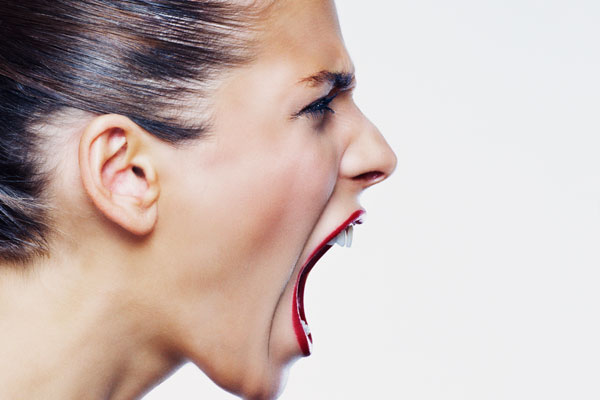
It is comments like these that enable people to feel this way: One person voices their thoughts, and it empowers the many who are silent to speak up in agreement. Initial hesitation disappears in the face of validation, and soon these voices grow louder, bolder, united in their common fear of anyone who is not like them. Their voices become a roar, eyes large and furious, teeth gnashing, forcing their way into the minds and hearts of those who live with disabilities.

As a young autistic girl, the only thing that made life more difficult than thinking my peers hated me was how I hated myself. No one had to tell me that all disabled people should be wiped out; I came to believe it myself, with thoughts of suicide beginning when I was in the fourth grade. For years, I eschewed the label of "autism" and clung desperately to Asperger's Syndrome, believing it somehow made me better than those who were more affected, more "obvious." I didn't want to be perceived the way I knew they were: As being stupid, retarded, deficient.

Hopeless.

I know now that my feelings were borne not out of hatred, but from incredible self-loathing. I have confronted the prejudices that I never intended to have and overcome them. Obvious or not, "high functioning" or not, we are all the same in the eyes of those who feel as these commenters do. They make assertions about who we are, what we love, how we live, the very core of our souls based on the category they place us into: "Acceptably" (not visibly) and "unacceptably" (visibly) disabled.

I want you to read these words.

I want you to decide if they sound like something you've ever thought, or said when you thought no one who would care was around. I want you to think about disabled children and adults who have suffered and continue to suffer because these attitudes are held by people in positions of power. I want you to understand that our pain is not the price for your comfort.

You can ignore your prejudices and the damage they cause, or you can face them and try to make a change for the better, both for yourself, and for individuals with disabilities all over the world.

Which do you choose?

Tuesday, March 8, 2016

When Nice Girls Get Mad: Thoughts on Women, Autism, and Anger

{This post was originally published on the blog of Autism Speaks, as part of their "In Our Own Words" series. The original post can be viewed here.}


Not too long ago, I found myself caught in an exchange with someone. I say “caught” because in that moment I felt much like a fish—swimming happily at first; then baited, lured away, and ensnared in the trap that was deliberately laid down for me.

Caught.

Having interacted with this person previously, I knew what was in store if it happened again. Yet despite the thicker skin I’ve grown over the years, I still found myself caught off guard by what ended up happening. But there was a marked difference this time in the emotional response that this interaction provoked in me. I did not feel sad or hurt. I did not cry.

I got angry.

It was a new kind of anger: Righteous. Justified. Certain. The sort of anger that I knew I had every right to feel, and that I was sure others would understand as well.

I was wrong.

The moment that I chose to vent my anger, something changed. Suddenly, I was chided for the negative tone in my words. I was told, “Amy, you’re so nice and sweet. Why would you be so mean?”

It was as if my brief, hyperbole-filled, frustration-fueled tirade had completely negated the person I was up until then. It seemed that, because I had not been able to hold in my emotions—even for just one moment—I could no longer be categorized as “nice and sweet.”

Girls and women on the autism spectrum are often viewed as being meek. Quiet. Shy. If a male on the spectrum gets angry, it is expected. Understood. Men are given outlets in society for this anger, and are not socially reprimanded for expressing it.

But if a female on the spectrum gets angry, it is unanticipated. Frightening. Meetings are held, concerns are voiced, medications are dispensed. In our society, women are expected to inhabit the role of peacekeeper, trouble-soother, feather un-ruffler. Anger is considered “unladylike.” Anger makes women “ugly,” and we are permitted to be ugly no more than we are to be angry.

Men on the autism spectrum are not often asked why they are angry. Their anger is acknowledged, recognized, and it is allowed to simply be. There is no reason, then, why this should not be possible for women on the spectrum.

The anger of women on the spectrum is no less real than the anger felt by men. As with all emotions, it is natural, it is healthy, and it is human. It is worth noting that the personhood of men on the spectrum is not called into question simply because they show anger, and so the same should then also hold true for women.

It is difficult enough to find our anger unwelcome by society at large, and to face the same double-standards in the autism world makes things that much more challenging. Women on the spectrum must have access to outlets of our own—safe, individualized options that give us the ability to express our anger without fear of judgment or reprisal.

To deny or be denied any part of the emotional experience is nothing less than to deny women on the spectrum of a part of our humanity.

And that’s definitely something to get angry about.

Sunday, February 28, 2016

The One Thing We Shouldn't Tell Children with Autism

Last year, I was asked to be a guest speaker at a middle school in Brooklyn for their Peace & Diversity Conference day. I spoke there to a group of sixth graders, and then had lunch with a self-contained class of sixth graders with autism. I was asked to return again this year, and made the trek out to Brooklyn at the end of January, just hours ahead of a snowy winter storm.

I can still see him so clearly. The small one, with thick, black-rimmed glasses that were almost too big for his face, sitting there tugging nervously at the hem of his shirt. He wasn't as gregarious as some of the other children--not like the one I affectionately refer to as Mr. Mayor, because he probably will be one someday--but he made an impression that I won't soon forget.

It's not often that I have the opportunity to be around sixth graders, let alone ones who are as self-aware and bright as they were. One by one, they came over to sit at my table and began asking me questions in that combination of wide-eyed innocent and weathered that only 12-year-olds seem to do so well. They sometimes spoke over each other, and as their enthusiasm grew, the questions flew out almost before their brains had a chance to finish coming up with them.

Then it was the small boy’s turn. He cleared his throat and looked up at me shyly.

“What was it like when you had autism?”

 I pause.

“Well…I still have autism,” I said, the full weight and meaning of his question just starting to sink in.

It’s no secret that most of the media portrayals of autism predominantly feature young children. Autistic adults—who are not necessarily cute, small, or more easily managed—are given very little of the spotlight in comparison. But perhaps there is more to it than that.

Every day, many children with autism undergo various types of therapies—ABA, Floortime, social skills groups, and so on. Self-contained classrooms are cropping up in schools all across the country, accompanied by a veritable army of teachers, psychologists, speech therapists, aides, and other professionals.  All of this in the name of helping these kids to overcome challenges, to thrive, and to succeed.

But increasingly, “success” seems to be defined as “no longer having or appearing to have autism.”

Parents, teachers, people with the very best of intentions are doing a great disservice to children with autism by sending a loud and specific message: That this is only temporary, something you are getting help for now, so that you—and everyone else—won’t have to deal with it later.

In reality, nothing could be further from the truth.

As a child, I did not undergo early invention. My parents tried one thing after another to help me, a desperate if not futile effort in a world that had little (if any) awareness or understanding of autism. The challenges I faced were many, yet few were greater than the low expectations and doubt in my abilities that others had for me.

Today, I am an autism consultant, a professional public speaker, a writer, and an advocate. I’ve surpassed the beliefs of those who said I would not amount to anything, who told my parents I would not graduate high school, let alone attend college. I have a Masters degree, I have my own business, and I have a life that took me years of struggle to build. My story only started because I believed it was worth writing, and even now, it is still being written.

I have overcome tremendous obstacles because I have worked hard to do so, not because I no longer have autism.

The fear of children with autism facing certain challenges for the rest of their lives is overwhelming, and often is the driving force for parents and teachers to find help for these children. But because autism is an integral part of who we are, overcoming those challenges does not and will not suddenly make us neurotypical. It just means that we are going to grow up and have those challenges replaced by new ones.

Therapies and treatments have their place, and can be meaningful and effective tools for assisting autistic children and their families. But preparing your child to be an adult with autism is the best and most important thing that you can do to help them live in this world.

I hope I will get to see that little boy with the thick-rimmed glasses again. 

I hope he grows into his striped shirt, grows into the person that he’s going to become, a person who will give so much to this world. I hope he knows how special he is, and that he can be autistic and succeed, be loved, be a friend, and be just exactly who he is.

All of our children can.