Saturday, December 30, 2017

What Happened When I Met a Young Man with Autism in Target


The first thing that I noticed was the feather.

He held it firmly in his fingers, and I watched as he traced the tip along the wall edges. Up, across, over, a pattern and a rhythm understood only by him.

But I knew.

It was a Friday afternoon in Target, and the din of people talking, machines warming food humming behind the counter, and the less-than-friendly overhead lights were all difficult to drown out. I kept my eyes downcast, focused on the breadsticks that I was eating, dipping them into the tiny cup of marinara sauce like a brush in paint, watching the crisp brown turn red.

I have not needed a feather of my own in many years. I knew why he did.

The woman with him—a sister, perhaps, or caretaker, I couldn’t be sure—spoke to him in that peculiar way. Autism-speak. The pitch of her voice just a shade unnaturally high, as if talking to a child instead of a 15-year-old boy.

“Can you come over here, Oliver?”

I felt her teetering perilously on the tightrope-thin hope that he would listen, be good, be still. But it’s hard to keep still when you know you make people uneasy just by existing in an autistic body.

Her praise for him came shortly after: “Good job listening!”

After a moment’s pause, Oliver kept moving, pacing around the cramped food court in slow, steady steps. The woman stood at the counter with a shopping cart, placing their order while keeping her gaze fixed on him. A myriad of emotions swirled through me as I tried not to stand up and shout solidarity at the top of my lungs. Instead, I kept quiet, carefully eyeing them both.

And then he stopped. Right behind my chair.

He hovered in what other people might consider uncomfortably close proximity. The feather was still clutched in his grasp, that source of comfort kept so close by. Flashes of the hair scrunchie I had always worn on my wrist came to mind, along with the memory of nearly clawing at my skin to escape the world around me, muted only by the soothing sensation of the fabric.

I get it. I’m a lot like you, Oliver.

The woman with him didn’t know that, though. She was looking in our direction, mild panic washing over her face as Oliver continued to stand behind me. Her shoulders tensed like I know my mother’s must have when I was a child and we were out in public. I could sense what would come next, could feel the word before she ever uttered it. She looked right at me, teeth pressed together tightly in an impossibly white row:

“Sorry…” she said, the apologetic twinge in her voice cutting like a knife in my stomach.

A stream-of-consciousness set of responses rushed through my mind:

Don’t be sorry! Don’t EVER be sorry! You never, ever need to apologize for him. HE doesn’t need to apologize for being who he is! NONE OF US DO.

I shook my head, pushing away the tears threatening to appear at the corner of my eyes, and waved a hand dismissively. I answered her, my voice quavering slightly:

“No, no!”

Behind me, Oliver continued what he was doing, and I fought the urge to hug him.

The woman alternately glanced between the counter and Oliver, still uncertain. As I ate the last few bites of my breadsticks, I realized I had to say something.

I walked over to her, half under the pretense of throwing out the breadstick box in the garbage behind her, and took a deep breath.

"Excuse me...Is he autistic?"

Cautious optimism colored her cheeks, along with a hint of surprise. She turned to face me, her demeanor almost relaxed compared to how tense it had been moments earlier.

"Yes. Yes, he is," she replied, confirming what I had known all along.

Without hesitation, I responded:

"Me, too."

We quickly fell to talking, and I learned that she worked at an autism school nearby, where Oliver was a student. I told her of my work as an international speaker and autism advocate, and how I knew all-too-well what Oliver was going through, having been on that path myself many years ago.

It was a moment that none of us could have expected, our paths crossing in Target on a Friday afternoon. The relief on her face was drawn in shapes; round cheekbones that rose instead of sank, and lines on her forehead that had stopped creasing even just briefly. Happiness and wistful sadness filled me in combined measure, wishing that my family could have felt that relief when I was Oliver's age. How it would have meant the world to encounter a stranger in public who didn't stare, didn't whisper, point, or disdainfully glance in our direction. How it would have given us all such comfort to know that we weren't alone in walking this strange, unpredictable, incredible journey of autism.

For me, those years are long past, but for Oliver and so many others like him, and for their loved ones and caregivers, these moments are present and alive. As we move into the start of a new year, I am thinking of all the Olivers out there, the autistic individuals and families looking for promise and hope in the days ahead. As an international speaker, advocate, and someone who has been where you are: I see you. I understand, and I am here to help.

You are not alone.

Tuesday, October 11, 2016

Why It's Still Okay to Hate People with Disabilities

I want you to read this.

I want you to read these words and see what living in this world is like not for individuals with disabilities, but for everyone else. I want you to see how your world shapes you over time, in subtle and overt ways, to see us.

The comments above were found on a post of a customer service stories website, in response to a story about a grocery store bagger with Down's syndrome. What shocked me wasn't that someone would so openly admit to hating and fearing individuals with disabilities, but that there was another comment below it echoing similar sentiments (not pictured). Had these commenters said that they hate black people, or gay people, and believe they should be wiped out, there would have been tremendous outrage. But threats to the lives of disabled people are met with barely a shrug.

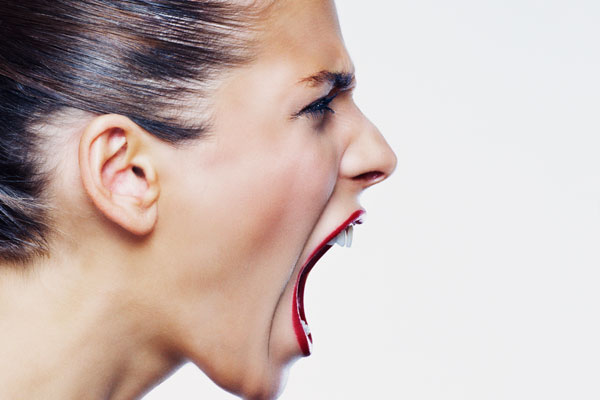
It is comments like these that enable people to feel this way: One person voices their thoughts, and it empowers the many who are silent to speak up in agreement. Initial hesitation disappears in the face of validation, and soon these voices grow louder, bolder, united in their common fear of anyone who is not like them. Their voices become a roar, eyes large and furious, teeth gnashing, forcing their way into the minds and hearts of those who live with disabilities.

As a young autistic girl, the only thing that made life more difficult than thinking my peers hated me was how I hated myself. No one had to tell me that all disabled people should be wiped out; I came to believe it myself, with thoughts of suicide beginning when I was in the fourth grade. For years, I eschewed the label of "autism" and clung desperately to Asperger's Syndrome, believing it somehow made me better than those who were more affected, more "obvious." I didn't want to be perceived the way I knew they were: As being stupid, retarded, deficient.

Hopeless.

I know now that my feelings were borne not out of hatred, but from incredible self-loathing. I have confronted the prejudices that I never intended to have and overcome them. Obvious or not, "high functioning" or not, we are all the same in the eyes of those who feel as these commenters do. They make assertions about who we are, what we love, how we live, the very core of our souls based on the category they place us into: "Acceptably" (not visibly) and "unacceptably" (visibly) disabled.

I want you to read these words.

I want you to decide if they sound like something you've ever thought, or said when you thought no one who would care was around. I want you to think about disabled children and adults who have suffered and continue to suffer because these attitudes are held by people in positions of power. I want you to understand that our pain is not the price for your comfort.

You can ignore your prejudices and the damage they cause, or you can face them and try to make a change for the better, both for yourself, and for individuals with disabilities all over the world.

Which do you choose?

Wednesday, May 25, 2016

SPARK Plug: Thought on Participating in Autism Research

I was recently asked to take part in the SPARK (Simons Foundation Powering Autism Research for Knowledge) online research partnership, and was both excited and apprehensive to hear about the study’s purpose and intended goals.

One of the things I began to wonder was what this study could this mean for our understanding of autism—where it comes from, why the incidence rate has seemingly “increased” in the last few years, and how or if it travels through families. The autism narrative is often challenging to navigate, and it is my hope that a study like SPARK could be a map to help us find our way.

When we talk about autism, there often seems to be a great divide. On one side, there are personal anecdotes, stories from individuals and families of their own personal journeys on the spectrum. On the other side, there are scientists and researchers working endlessly to collect data and compile information about autism as it relates to a greater epidemiological picture.

Both sides have been and continue to be invested in finding the cause of autism, of whether environmental factors or heredity or something else hold the key to deciphering autism. The SPARK study has the potential to answer that question, to take the tiniest of saliva samples from our mouths to someone’s ears who can then say, “This is what causes autism.”

Along with illuminating causes, there is the possibility of this research being used to develop treatments for autism. While it is important to find ways of reducing or preventing self-injurious and other physically harmful behaviors sometimes associated with autism, we must also remember that autism is part of who a person is, and treatments should be administered with the person, not just the disorder, in mind.

Autism research has continued to expand over the last few years, and as we study the spectrum in a laboratory setting, it is imperative that autistic individuals be included in that research process—not only as subjects, but as co-investigators. Our triumphs and heartbreaks, our potential futures, our very lives are being put under the microscope, and it is we who have the greatest stake in this research.

One day, we will learn the results of the SPARK study, though it will take time for the full impact of those results to unfold. I am hopeful that the picture these results paint will show that autism is not a puzzle to be solved, but a story to be told. I want to see the answers and knowledge that we glean open a discussion on how we can improve the quality of life not just for future generations, but for individuals on the spectrum living in the world right now.

Most of all, I want those of us who have felt out of place in the world, in our communities, and in our families to learn through SPARK that what lives in our DNA is not something that was done to us, but part of what makes us who we are. 

Tuesday, April 5, 2016

Vexed by Vaxxed: Autism, Vaccines, and the Epidemic of Ignorance

It's only a few days into 2016's Autism Awareness/Autism Acceptance Month, and despite how much progress has been made over the past year, I have already come face-to-face with evidence of how much work still needs to be done.

As most folks probably know by now, the controversial documentary Vaxxed! was slated to be screened at the Tribeca Film Festival later this month, at the behest of the festival's founder, Robert De Niro, who is a parent of a teenage son on the autism spectrum. Shortly after defending his decision to screen the film, De Niro announced that Vaxxed! would not be shown at the festival after all, saying that he had reviewed it with experts in the medical community and that "[...]we do not believe it contributes to or furthers the discussion I had hoped for."

The film, which was directed by discredited researcher and anti-vaccine progenitor Andrew Wakefield, has provoked an incredible backlash--first from the scientific and autism community when it was going to be shown at Tribeca, and then backlash from the anti-vaccine movement when it wasn't. Yet the comments and attitudes of those who are anti-vaccine have proven for me to be some of the most disturbing and misinformed that I have witnessed.

This culminated in my seeing a Facebook post from Vaxxed! producer Del Bigtree (how is that even a real name?) and a response to a comment on that post, which I have screencapped below:

(Source: Del Bigtree Facebook post)
When you create a narrative of autism that centers almost entirely around young children, this is the result.

When you promote an agenda that says autism is caused by vaccines, that ignores the presence of autism throughout history, insisting it is something new that didn't exist twenty, thirty, forty years ago so therefore only affects children, this is the result.

Adults with autism are right where we've always been: Here, among you, living our lives to the best of our ability, trying to survive in a world that neither understands nor accepts us.

We are here now as much as we were in times past; the only difference is that twenty, thirty, forty years ago, you didn't see us. You couldn't, because we lived in institutions, placed there by our families who were told to lock us away, forget about us, and move on with their lives. Autism was "childhood schizophrenia," mental retardation, "manic depression,"...every diagnosis but what autism actually is, because for so many years, it was neither understood nor widely recognized.

So we suffered in silence. Alone. But we were there.

Today, knowledge of autism is greater than ever before. It has entered and become affixed to the popular global consciousness, and specialists and providers trained in the assessment and treatment of autism spectrum disorders are in overwhelming demand.

But autistic children do not exist in a vacuum. They will grow up, age out, have different needs and challenges as they get older, for which society remains woefully unprepared. Yet the single greatest resource for helping these children is still the most untapped one:

Autistic adults. We who offer both caution and hope, because we know firsthand what it means to navigate the perils and pitfalls of being autistic in a neurotypical world.

It often seems that becoming an adult with autism is never presented as an option to children of anti-vaccine parents, and it is these children for whom I feel the greatest sympathy. Children who hear themselves described as "vaccine-injured" or "vaccine-damaged."  Children who hear these sentiments over and over again, and who start to see themselves as exactly that:

Broken. Less. A toy in need of a factory reset.

But individuals with autism are not objects; we are human beings with personalities, passions, strengths, and challenges that are both tied to and so much more than our neurology.

It is this viewpoint that I would like to see represented at events like the Tribeca Film Festival and other Autism Awareness/Acceptance month celebrations. We must recognize and prioritize common sense and rational thought, rather than fear-mongering and hysteria-based rhetoric.

I want anti-vax parents to stop searching for the 'normal' child they think is missing and start looking at the autistic child that is right in front of them.

It begins with education. It begins with denying a platform to those whose words and ideas would promote ignorance and ultimately cause harm individuals with autism and their loved ones. It begins with raising the voices of those who are working to affect positive change, those with stories to tell and wisdom to dispense.

Change your own perceptions of autism, of what it means to be autistic, of what the possibilities for autistic children are, and of what we can do to ensure a better quality of life for all individuals with autism.

It begins with you. It begins today.

Tuesday, March 8, 2016

When Nice Girls Get Mad: Thoughts on Women, Autism, and Anger

{This post was originally published on the blog of Autism Speaks, as part of their "In Our Own Words" series. The original post can be viewed here.}


Not too long ago, I found myself caught in an exchange with someone. I say “caught” because in that moment I felt much like a fish—swimming happily at first; then baited, lured away, and ensnared in the trap that was deliberately laid down for me.

Caught.

Having interacted with this person previously, I knew what was in store if it happened again. Yet despite the thicker skin I’ve grown over the years, I still found myself caught off guard by what ended up happening. But there was a marked difference this time in the emotional response that this interaction provoked in me. I did not feel sad or hurt. I did not cry.

I got angry.

It was a new kind of anger: Righteous. Justified. Certain. The sort of anger that I knew I had every right to feel, and that I was sure others would understand as well.

I was wrong.

The moment that I chose to vent my anger, something changed. Suddenly, I was chided for the negative tone in my words. I was told, “Amy, you’re so nice and sweet. Why would you be so mean?

It was as if my brief, hyperbole-filled, frustration-fueled tirade had completely negated the person I was up until then. It seemed that, because I had not been able to hold in my emotions—even for just one moment—I could no longer be categorized as “nice and sweet.”

Girls and women on the autism spectrum are often viewed as being meek. Quiet. Shy. If a male on the spectrum gets angry, it is expected. Understood. Men are given outlets in society for this anger, and are not socially reprimanded for expressing it.

But if a female on the spectrum gets angry, it is unanticipated. Frightening. Meetings are held, concerns are voiced, medications are dispensed. In our society, women are expected to inhabit the role of peacekeeper, trouble-soother, feather un-ruffler. Anger is considered “unladylike.” Anger makes women “ugly,” and we are permitted to be ugly no more than we are to be angry.

Men on the autism spectrum are not often asked why they are angry. Their anger is acknowledged, recognized, and it is allowed to simply be. There is no reason, then, why this should not be possible for women on the spectrum.

The anger of women on the spectrum is no less real than the anger felt by men. As with all emotions, it is natural, it is healthy, and it is human. It is worth noting that the personhood of men on the spectrum is not called into question simply because they show anger, and so the same should then also hold true for women.

It is difficult enough to find our anger unwelcome by society at large, and to face the same double-standards in the autism world makes things that much more challenging. Women on the spectrum must have access to outlets of our own—safe, individualized options that give us the ability to express our anger without fear of judgment or reprisal.

To deny or be denied any part of the emotional experience is nothing less than to deny women on the spectrum of a part of our humanity.

And that’s definitely something to get angry about.

Sunday, February 28, 2016

The One Thing We Shouldn't Tell Children with Autism

Last year, I was asked to be a guest speaker at a middle school in Brooklyn for their Peace & Diversity Conference day. I spoke there to a group of sixth graders, and then had lunch with a self-contained class of sixth graders with autism. I was asked to return again this year, and made the trek out to Brooklyn at the end of January, just hours ahead of a snowy winter storm.

I can still see him so clearly. The small one, with thick, black-rimmed glasses that were almost too big for his face, sitting there tugging nervously at the hem of his shirt. He wasn't as gregarious as some of the other children--not like the one I affectionately refer to as Mr. Mayor, because he probably will be one someday--but he made an impression that I won't soon forget.

It's not often that I have the opportunity to be around sixth graders, let alone ones who are as self-aware and bright as they were. One by one, they came over to sit at my table and began asking me questions in that combination of wide-eyed innocent and weathered that only 12-year-olds seem to do so well. They sometimes spoke over each other, and as their enthusiasm grew, the questions flew out almost before their brains had a chance to finish coming up with them.

Then it was the small boy’s turn. He cleared his throat and looked up at me shyly.

“What was it like when you had autism?”

 I pause.

“Well…I still have autism,” I said, the full weight and meaning of his question just starting to sink in.

It’s no secret that most of the media portrayals of autism predominantly feature young children. Autistic adults—who are not necessarily cute, small, or more easily managed—are given very little of the spotlight in comparison. But perhaps there is more to it than that.

Every day, many children with autism undergo various types of therapies—ABA, Floortime, social skills groups, and so on. Self-contained classrooms are cropping up in schools all across the country, accompanied by a veritable army of teachers, psychologists, speech therapists, aides, and other professionals.  All of this in the name of helping these kids to overcome challenges, to thrive, and to succeed.

But increasingly, “success” seems to be defined as “no longer having or appearing to have autism.”

Parents, teachers, people with the very best of intentions are doing a great disservice to children with autism by sending a loud and specific message: That this is only temporary, something you are getting help for now, so that you—and everyone else—won’t have to deal with it later.

In reality, nothing could be further from the truth.

As a child, I did not undergo early invention. My parents tried one thing after another to help me, a desperate if not futile effort in a world that had little (if any) awareness or understanding of autism. The challenges I faced were many, yet few were greater than the low expectations and doubt in my abilities that others had for me.

Today, I am an autism consultant, a professional public speaker, a writer, and an advocate. I’ve surpassed the beliefs of those who said I would not amount to anything, who told my parents I would not graduate high school, let alone attend college. I have a Masters degree, I have my own business, and I have a life that took me years of struggle to build. My story only started because I believed it was worth writing, and even now, it is still being written.

I have overcome tremendous obstacles because I have worked hard to do so, not because I no longer have autism.

The fear of children with autism facing certain challenges for the rest of their lives is overwhelming, and often is the driving force for parents and teachers to find help for these children. But because autism is an integral part of who we are, overcoming those challenges does not and will not suddenly make us neurotypical. It just means that we are going to grow up and have those challenges replaced by new ones.

Therapies and treatments have their place, and can be meaningful and effective tools for assisting autistic children and their families. But preparing your child to be an adult with autism is the best and most important thing that you can do to help them live in this world.

I hope I will get to see that little boy with the thick-rimmed glasses again. 

I hope he grows into his striped shirt, grows into the person that he’s going to become, a person who will give so much to this world. I hope he knows how special he is, and that he can be autistic and succeed, be loved, be a friend, and be just exactly who he is.

All of our children can.

Monday, September 28, 2015

Autism in the Movies: Thoughts on "Jack of the Red Hearts"

On September 24th, I had the opportunity to attend the opening night gala of the Golden Door Film Festival in Jersey City, New Jersey, which included a screening of the film Jack of the Red Hearts.

I hadn't known much about the movie beforehand, but several of the filmmakers were present at the event, including director Janet Grillo, writer Jennifer Deaton, and actors Famke Janssen (Kay), AnnaSophia Robb (Jack), and Taylor Richardson (Glory). 

[From left: Famke Janssen, AnnaSophia Robb, and Taylor Richardson in Jack of the Red Hearts.]
The movie centers around teenage runaway Jack (Robb), who cons her way into the home and life of a girl on the autism spectrum (Richardson) and her family in an effort to rescue and obtain custody of her own sister from foster care. When a young woman answers the family's advertisement (placed, strangely enough, via the use of a flyer with tearaway pieces of paper at the bottom) for a companion for Glory, Jack deceives the clearly-qualified woman into thinking the job's been filled, takes her résumé, and passes herself off as this person instead.

From this moment on, I knew exactly where the film was going and what was going to happen. I knew perhaps because this particular movie trope has been used before, especially in movies featuring disabled people. I knew because this was a movie made by someone who knows autism--albeit from the outside--and needed a way to make autism accessible to those who don't. And I knew that I have sympathized and identified with neurotypical (NT) characters in movies for years--largely due to few other options--but that somewhere, a decision was made that a typical audience couldn't be expected to sympathize with a little autistic girl, thus necessitating the addition of an NT protagonist.

It's no secret that I am a fairly sensitive person, and without a doubt, Jack of the Red Hearts struck a deep nerve. I'm not sure if "triggered" is the right word, but the film brought a great many memories rushing back and elicited an emotional response from me--but not necessarily in the good way. 

In actuality, as I sat there watching this film, I found myself fighting the urge to get up and leave the theater on several occasions. One occurred early on, when the mother of the autistic girl (Janssen) was holding and drinking from a coffee mug with the words "CURE AUTISM NOW" emblazoned on it in large letters. 

Another was witnessing the abusive--and there really is no other word for it but "abusive"--behavior of Jack toward Glory. Tying Glory to a fence with a leash as though she were an animal, when not neglecting her altogether. Forcing herself into Glory's personal space and brusquely demanding, "What's wrong with you?" Despite the film's insistence that I do so, I felt no sympathy for Jack, and instead recoiled at the thought of anyone like her ever being remotely near a person on the spectrum. 

We're presented with the tragedy of Jack's life, and made to place her desperation on par with Glory's family's desperation, and that somehow they both needed each other, even if they didn't know it. But I am an adult on the autism spectrum, and before that, I was a child with autism--a little girl, not too unlike Glory. What I wanted more than anything was to have a friend, and had a Jack-like figure been part of my life and then left as abruptly as she came into it, it would have hurt me tremendously. Jack's life might have been screwed up and rife with anguish, but that did and does not give her the right to wreak havoc on someone else's--least of all, Glory, a vulnerable child who would become attached to her and view her as a friend.

There was a Q&A with the filmmakers after the movie ended, and I had hoped for some insight into the decisions made in the process of creating this movie. What I learned instead was that, of all the people standing on that stage, only one or two truly seemed to "get" autism. I managed to push aside my emotions in favor of steeled strength and raised my hand to ask a question, but unfortunately I was not called on. I did not expect the members of the cast to have an in-depth knowledge of autism, but to hear some of the crew speak as they did made me realize just how much work there is still to be done.

When making any movie about autism, or featuring a character that has autism--a character that, in this case, was not actually played by an autistic actress--it is vitally important to receive and listen to feedback from individuals on the spectrum. Had the creators of Jack of the Red Hearts done this, I can almost guarantee that the film's climactic scene would've been completely different, as what was set up to be a poignant moment was, for me, a degrading and uncomfortable exercise in cinematic absurdity. 

I wish I could say that this film moved me. I wish I could say that I am so thrilled that there is a movie about a girl with autism as a central figure, and that I wholeheartedly recommend it to any and all those whose lives are touched by autism. But I cannot separate the dramatized elements of this movie from reality, because I have lived the reality, and the film's flaws are too troubling to overlook. I have no doubt that the intentions of the film's director and writer were entirely good, but the overall execution could have been so much better.

To say I was disappointed by Jack of the Red Hearts is putting it mildly. Individuals on the autism spectrum deserve more than being portrayed as burdens on the people around us. Movies entertain, but they also inform, and autistic people 
are certainly compelling enough to be the voices of our own narrative, to be the ones informing the world about what autism is and what our lives are like. Hopefully one day filmmakers will realize this, and give us a chance to speak for ourselves on screen.

And when the time comes, I know people will sit up and listen.  

Monday, August 31, 2015

My Father, the Hero

When I was a little girl, my dad would take me to a Hostess bakery outlet in Medford. It seemed very far from our house--over and past long stretches of blue sky dotted with trees and telephone poles and signs whizzing by in a blur. Stepping inside, it was as if I'd arrived at another world, one full of bread smells and baked goods with ingredients I delighted in reading because I was the only 8-year-old who could pronounce them.

We walked together through the aisles of that magical place, and I beamed up at my father, who I thought was also magical, because he always knew how to get there.

He was my hero that way, you see.


I go back to Long Island at least a few times a month, to visit. The drive there and the return trip to New Jersey were familiar before I ever had a license, so accustomed was I to going to the Garden State as a child to see my grandparents, aunts, uncles, and various cousins. But one of the main things I've learned since I started driving is that the journey isn't always the same; on the road, anything can happen.

So it was that I found myself forced to take a detour on one of my most recent drives back to New Jersey. The exit I normally take off of Route 80 is comprised of two ramps--one that goes to the right, and one that goes to the left, which is where I go. On this particular day, however, the left ramp was closed, and I had no choice but to head down the road not (ever) taken. Familiarity quickly vanished as I reached a somewhat hazardous intersection in the heart of downtown Paterson. I knew there was only one option.

I called my father.

Dad grew up in Paterson, and though the landscape and cultural makeup of the city have undergone a significant shift since his years living there, some things are still the same. 

The streets.

More importantly, the map that my father has of them in his head.

It's said that some folks on the autism spectrum have the gift of a photographic memory. That they can recall the layout of a street, or even an entire city, after being there on only a few occasions. My father, the Aspie, has not lived in New Jersey for over forty years, not since moving out to Long Island after getting a teaching job--yet the street names and placements remain clear as day in his mind.

It was due to this that he was able to perfectly guide me through Paterson to where I needed to be to complete the drive home. He spoke carefully, repeating directions when necessary, never rushing or admonishing me through each turn. It was as though he was there in the car with me, steering gently, again taking me from one world to another. Not once did I get lost, and in the moments I felt most unsure, my father stayed calm.

It can't be easy watching your daughter take charge of her own life, but when you're a parent, that's exactly what you're preparing your child to do. You let go, and let them. Even when it scares you. But maybe that's my dad's gift: Not controlling the journey, or the destination, but doing the best he can to help me arrive there safe and sound.

He is my hero that way. 

He always will be. 

Wednesday, April 1, 2015

Why I Don't Like April Fool's Day

It’s that (un)magical time of year again, where an entire day is dedicated to making fools out of people. Or, if you were me in seventh grade, that was every day. 
I’ve always had a difficult time telling when people are joking. Granted, I have gotten much better at it over the years, but what I’ve come to realize is that there is a distinct difference between a joke and a prank. People can share a joke, can laugh together, be part of it together. But a prank is decidedly far more one-sided: It’s Person A perpetrating a ruse against a completely-unknowing Person B. 
I have no doubt that there exist pranks that are harmless, or “softball” pranks, as I call them. From my experience, however, most pranks are mean-spirited, if not outright malicious. And that is why, even all these years later, I still flinch when I (inadvertently) click on a hoax headline and the website it takes me to says “April Fool’s!”. I know that I’m not the specific target of the prank—I know, in my mind, that it wasn’t an attempt by the website creator to purposely fool me, Amy Gravino, a person said creator has never even met.
But when you have been the target of a prank, when you have been humiliated, singled out, and aimed at because people know you are gullible, it’s hard to forget what that feels like, in your heart. When I clicked that website, I could still hear the laughter at my expense, laughter from my classmates who moments earlier I had thought actually liked me, but who were now laughing as I stood there alone, cheeks burning with embarrassment.
So I flinch. I pause, for the most fleeting of moments, and have to remind myself that it’s okay. Even though that laughter is faint now, it never fully goes away. 
But I sure wish April Fool’s Day would.

Thursday, February 5, 2015

Russian To Conclusions: The Problem with Diagnosing Vladimir Putin with Asperger's Syndrome

This morning, I received a message on Facebook from a friend: "Did you see this?" along with a link to a news story from USA Today. It stated that a study conducted by a Pentagon think tank in 2008 concluded that Russian president Vladimir Putin has Asperger's Syndrome.

Now, after reading the article, as well as numerous posts and comments online in response to it, all I can think is:

The president of Russia has Asperger's Syndrome? You're Putin me on.

There are a number of problems with diagnosing (however roundabout-ly) any world leader with Asperger's Syndrome, never mind one who has as abysmal a human rights track record and history of sociopath-level cruelty and indifference to his own people as Vladimir Putin. 

Right out of the gate, the report on the study says the researchers can't prove that Putin has Asperger's because they were unable to perform a brain scan on him. So it makes you wonder what the aim of running such a story could be, if not to provide something definitive.

What this really is and was is a shot fired. Wars happen not only with guns and bullets, but with words and propaganda. So the shot that was fired in this instance is reminiscent of a Cold War tactic: Discrediting the enemy by saying that he has Asperger's Syndrome.

And therein lies the problem: Whether the researchers intended such or not, Asperger's Syndrome is being used an insult, a reason why Vladimir Putin makes the terrible decisions that he does, and why he should be viewed as an ineffective leader. The equation then turns to this:

Vladimir Putin is evil. 
Vladimir Putin has Asperger's Syndrome.
Asperger's Syndrome is evil
.

It may seem like a far leap to those of us who live in and understand the world of autism and Asperger's Syndrome, but it is not difficult to lead those who are unfamiliar with Asperger's down that path. It is a path already begun with Adam Lanza and the Newtown killings in 2012, and carved out further with every subsequent mass shooting where the perpetrator is immediately described as having Asperger's Syndrome--regardless of whether it is true.

With every unfounded assertion, every assumption and negative media portrayal comes a mountain of discrimination and fear from under which we must repeatedly climb. And when you start to feel as though no one cares if you get out, the weight of that mountain eventually becomes unbearable.

Individuals with Asperger's Syndrome are artists. Writers. Mathematicians. Engineers. We view life through a different lens, and if properly supported and nurtured, can use that vantage to better ourselves, our communities, and the world at large. But if we are continually associated with people like Vladimir Putin--associated with psychopaths, with those who are to be feared, with evil--those opportunities will never come. 

Let us hope that media outlets will consider taking a more responsible tack in reporting stories such as these from now on, because it is not just the United States' relations with Russia or public opinion that is at stake.

The lives and futures of individuals with Asperger's Syndrome are at stake. And we deserve better.

Monday, December 15, 2014

Keynote Speech at AHA-NY's Fall Autism Conference

Happy Holidays, folks! I am so happy to be able to share with you video of my first-ever keynote speech, about my experiences in school and growing up as a girl on the autism spectrum, which I gave at AHA-NY's 2014 Fall Autism conference in Holbrook, New York this past October. It's a bit long, but I hope you'll all take the time to watch it when you can. And please feel free to share this with anyone you think might be interested. Thank you!

Sunday, November 23, 2014

Dear Jxxxxxxn

I've heard a lot about how it can be cathartic to write a letter to someone that you'll never be able to speak to, and so I decided to write this. It felt incredibly good to get all of this out, even with it being this many years later. So here it is:

------

Dear Jxxxxxxn,

I don't know why I'm writing this letter.

I don't know what I can say to you, eight years later, that would bring me any more closure than what I had to find by myself. Because you never looked me in the eye and said it was done. Never saw my face and the tears streaming down my cheeks. Your message of finality was sent to me online, or in half-eaten phone calls at random hours of the day and night. 

It was in the box that you left outside my apartment building at seven a.m. one day, along with the monogrammed journal I'd gotten you for your birthday.

I could tell you that things have gotten much better since I last saw you. The broken girl, the shell you left behind has filled back in and is complete again. Complete not because I know I'm okay even though you're not here, but because I know I was okay even when you were there.  You don't make me more or less. I am better not because you are gone, but because I  have finally arrived.

I remember you messaging me once, months after everything happened, to tell me that you were sorry for ruining my life. 

I was as angered by it then as I am at peace with it now. You don't owe me any apology, silly, because you didn't ruin my life. In fact, it's because of you that I know what being in love feels like. I know now that you didn't feel that way about me, but it does not make what I felt any less real. 

I loved you very much, you see. It surprised me how much I did, because I had no idea I could feel that deeply for someone. I thought being on the autism spectrum meant that I would never fall in love, but you proved me wrong. I learned that I could give my whole heart to someone, that I could feel tingly and slightly nauseated (in a good way) at just the thought of seeing someone, all at once. I learned that I could lose myself in love and find my way back, no matter how long or hard I fell.

In the end, you tore my heart out and stomped on it. As high as the high of being in love was, the low of losing it was the lowest I've ever gone. I felt everything and nothing at the same time, a pain so profound it just bled into numbness. Sometimes I still wonder if any of it was real, for you. If you ever actually felt anything for me. But I don't need the truth from you anymore. It wouldn't matter even if you told it to me.

You didn't fall in love with me, Jxxxxxxn. But I think instead I got something a lot better, something that maybe wouldn't have happened without you.

I fell in love with me. 

And I'm still standing.

Sincerely yours,

~*Amy Gravino

Thursday, October 30, 2014

I Wanna Hold Your Hand: Getting Intimate with Autism

[Note: This was originally published on the blog of Autism Speaks, for their "In Our Own Words" series. Any and all feedback is very much appreciated!]

When I was 15 years old, a boy moved in across the street.   He was, of course, the cutest and dreamiest boy I’d ever seen, with his green eyes, freckle-covered pink cheeks and a bowl haircut that would’ve made Julius Caesar proud.

More than anything, I longed to be close to him—to see my almost-immediate crush on him blossom into a full blown relationship—and when we’d hang out in his room after school, I was constantly glued to his side.

“Amy, come look at something on the computer.”

Whoosh! Now I’m three inches from his face, staring intently at him instead of the screen in front of us. In my mind, physical closeness equaled emotional closeness; because I did not have the tools or understand how to create the latter, I (over)compensated with the former. 

An early harsh lesson in intimacy.

What no one told me then, and what I didn’t realize until years later, is that intimacy takes a long time, and it is not something you can force into being. It starts with trust, with the willingness to allow someone into your personal space, and vice-versa, and it grows with the aid of continual and clear communication.
Intimacy is being naked with someone with your clothes on.

On a visual level, there are certain actions or gestures that we know and interpret as intimate: Kissing. Touching someone’s face, hands, or other body parts. Not only do all of these tend to present a challenge for individuals on the autism spectrum who have certain sensory issues, but visual depictions stop at the surface, and are merely the tip of the intimacy iceberg.

For people on the spectrum, intimacy can and often does look different from how it is for neurotypical folks. Sometimes intimacy is simply sitting quietly in the same room with someone, tolerating their presence in your private environment. Whatever form it may take, intimacy runs deep, and there is no one way—no right or wrong way—to be intimate with someone.

When I was 22 years old, I had sex for the first time.

I believed, as had been the case in almost every movie I’d seen up until then, that after we finished making love, there would be some sort of cuddling. I felt prepared for this, certain of its inevitability, and when he returned from the bathroom after washing up, I turned to him expectantly.

“No,” he said, facing away from me, when I asked if he wanted to cuddle. “I’m really tired.”

So I let him be, and laid there in the suddenly cold bed, sleeplessly staring at the ceiling and wondering what I had done wrong.

Intimacy is unselfish.

To achieve true intimacy, all parties involved must have their needs taken into account—another challenge that I have faced as a woman on the autism spectrum, as I believed for so long that, because I could not always articulate my needs, everyone else’s needs mattered more.

In addition, having a dearth of opportunities for intimacy meant trying so hard not to screw up the few chances I did have. But being so afraid to make a mistake—mistakes that are far more easily forgiven when you’re not on the autism spectrum—only made me (unwittingly) put undue pressure both on myself and my partner, and those experiences were not very enjoyable as a result.

Above all else, intimacy takes work.

Intimacy takes patience, kindness and a whole lot of understanding. There will always be people trying to solve the great mystery of intimacy, and there will always be shelves full of self-help books and angst-filled rock n’ roll songs on the subject.

Intimacy challenges neurotypical and non-neurotypical individuals alike, but the difference is that it is actually acknowledged that intimacy is something that neurotypical people want.

Individuals on the autism spectrum often have to take a different road to arrive at the same destination, but our journey is no less valid.

And the first step starts with seeing us as people who have those desires and needs, and who are as capable of understanding and learning intimacy as anyone else.

Thursday, October 9, 2014

October Speaking Appearances!

Hello, folks! Just wanted to share with you that I will be speaking at two autism conferences this month. The first is AHA-NY's 24th Annual Fall Conference, at which I will be giving my first ever keynote address, on my experiences in school as a child on the autism spectrum. The conference will be held at Eastern Suffolk BOCES in Holbrook, NY on October 20th:

(Click here to view conference brochure)
The second speaking engagement that I have lined up is a workshop on autism and sexuality at Autism New Jersey's 32nd Annual Conference, which I will be co-presenting with Dr. Peter Gerhardt and autism self-advocate Jason Ross. The conference will be held at the Atlantic City Convention Center in Atlantic City, NJ on October 23rd:

(Click here to view conference brochure)
Audio recordings of both presentations will be available after the conferences, and I am hoping to possibly have my keynote speech video-recorded. I will post links to all recordings as soon as they are available. And if you're anywhere near either of these conference venues, I'd love to see you in person! Plus, you'll be in for a great day or two of informative and interesting autism-related presentations and discussions.

Thanks, everyone, and keep checking back for more posts about future speaking appearances!

Monday, September 29, 2014

The Butterfly and the Bear

Once upon a time, there was a butterfly and a bear.

They became friends when they were little, fast frends, because the bear didn’t get along with the other bears and the butterfly didn’t get along with the other butterflies. They met and became friends because they thought they were the same.

The butterfly and the bear stayed friends for many happy years, fluttering/walking side by side (respectively). Despite their differences, no one could tell them that they weren’t alike. The butterfly thought, The bear is an animal, and I’m an animal. We’re both animals!

Over time, the bear grew bigger, and the butterfly did, too. The bigger they got, though, the more the butterfly noticed how big the bear’s shadow was. The bear made long strides with its four feet, moving faster than the butterfly could keep up with, even though it flapped its wings as hard as it could.

Most frightening of all was when the bear began to stand on its two hind legs and roared in the butterfly’s tiny face. The butterfly had never heard the bear make such a sound before, not in all the time they’d been friends, and a new, very strange thought came into the butterfly’s head:

Maybe the bear and I are different…

Such thoughts unnerved the butterfly, and it quickly shook them off and flew back to the bear, hoping that if it reminded the bear they were friends, the bear would stop roaring.

The only thing the bear did was roar some more.

Soon the butterfly could not take the bear’s roaring, so loud and chilling that the butterfly saw the bear not as its friend, but as something that could hurt it. And that made it all the worse—knowing that the bear could hurt the butterfly and not care if it did. Worse, even, than the bear actually hurting it.

Eventually, the butterfly stopped seeing the bear, as it hid deep in its dark cave, eschewing sunlight and the butterfly’s company in favor of a solitary, cold existence. The butterfly sought out other butterflies—some blue with white spots, some orange with patches of black, and even some yellow ones. Suddenly the butterfly felt alive, more at ease, and loved, things it had never felt before. The other butterflies flapped happily whenever the butterfly came near, so unlike the fearsome roar of the butterfly’s old friend.

…But the butterfly could not forget the bear entirely.

It was late the day the butterfly saw the bear one last time. Streaks of pink and purple-y blue lined the horizon, a cloudless backdrop so fitting for a moment of clarity.

The bear invited the butterfly into its cave, and the butterfly reluctantly accepted. It did not know what to expect—Had the bear learned to stop roaring? Did it remember when it and the butterfly were friends? Questions to which the butterfly had so longed for answers, and that it now hoped to get.

Slowly, the butterfly flew into the cave, peering into the darkness for any sign of the bear. The further inside the butterfly went, the more the light dimmed. The smell inside the cave was like decay, as if the life inside had all but disappeared. And finally, after flapping all the way to the back of the cave, the butterfly found the bear, and was horrified by what it saw.

The bear’s once-soft fur was matted, covered in dirt and dust. Its strong legs were splayed apart and immobile, as if the bear had stopped walking after its and the butterfly parted ways. And the bear’s eyes, previously warm and gentle, had grown cold and distant, fully devoid of their long-lost sparkle.

Before the butterfly could even ask the bear what had happened, it lifted one still-working limb and swiped at the butterfly, its razor-sharp claws tearing, and it missed the butterfly’s heart by only the barest inch.

The now-wounded butterfly turned from the bear and flew from the cave—as much as a wounded butterfly can fly—and did not stop until it reached the cool night air. Relief coursed through the butterfly’s veins, and it finally came to rest on a tree branch nearby.

The bear is not my friend anymore.

Relief. Sadness. Despair. The butterfly knew them all in that moment, unable to stop the tiny tears springing from its eyes. It thought of what the bear once was, compared to what it had become, and knew the only thing left was to return to the other butterflies and leave the bear behind.

The butterfly needs time to heal. The scars won’t ever fully fade away.

The butterfly has come out from under the bear’s shadow.

The butterfly is free.

Wednesday, August 13, 2014

Thoughts on Depression and the Death of Robin Williams

You came to visit me today.

You sat next to me in Science class, somewhere between kingdom and phylum. Nobody else saw you come in, of course, because you're sneaky. You looked like the boy in the flannel shirt and Reeboks, but I knew it was you.

We're not supposed to talk in class, but you did it anyway. I heard you whispering about the blinds being closed so no light could come in, and how it would always be that dark. But that classroom was always dark, and I couldn't remember when it wasn't.

Suddenly, you were sitting on my chest. I didn't see you move, but I felt you pressing into me, felt the weight bearing down. You told me that eleven or twelve years was enough, that the rest would all be the same, that there would never be anything new or different. Or better.

You were inside my head. I couldn't breathe.

That was the first time that I saw the appeal of the neck-length tape measure wrapped around a hook in the cubby.

---

Earlier this week, our collective hearts were broken and our spirits devastated when beloved comedian/actor Robin Williams passed away. He took his own life at the age of 63, and after hearing the nature of his death, I have started to remember my own experiences with depression and suicidal thoughts, which started when I was in elementary school.

It's not something I have occasion to speak about very often, nor that I particularly like speaking about. The memories, what few of them remain, are too painful to revisit. I've attempted to describe it via the passage above, but the difficult part to reconcile is that this didn't happen just once; it happened over and over and over again, in different settings and to varying degrees all through my school career.

When you are young, you don't fully understand the finality and permanence of death. As the thought of suicide grew in my mind, what I believed was that killing myself meant killing someone that everyone hated, and that if I eradicated that part of me, I would return, somehow, as someone that everyone loved.

To this day, I am still not sure what kept me from doing it. Speaking in practical terms, I couldn't overdose because I wasn't able to swallow pills at the time; I was afraid of blood and sharp things, so that ruled out a slightly more violent end; and I didn't have the necessary fine motor coordination skills to make a noose. It reads like a comedy of errors, but I feel that these obstacles were put in place almost by design. I remember thinking of each of these things as one failure after another on my part. I felt that I was a failure at life...and then I was a failure at death, too.

That was what depression told me.

What it didn't tell me was that I wasn't alone. That there were and are so many others, like Robin Williams, who suffer quietly, wanting and hoping for things to be different, but who feel trapped, isolated, and lost in their despair.

Though I did begin taking Prozac for the depression at age 12 (and voluntarily stopped when I was 15), the cloud only began to lift after I left high school, when--for the first time that I could really remember--people saw me. They saw that I was here, that I existed, and that maybe I was even a good person. Their voices became louder than depression's voice, and at long last, I could breathe again.

I know that I got very lucky.

My story is only one story, and depression affects other people in all sorts of different ways. We have a very long way to go yet when it comes to discussing mental illness and suicide, and the stigma that surrounds these issues will never go away unless we start talking about them.

If nothing else, I hope the death of Robin Williams will be the beginning of this desperately-needed change.

I only wish he could be around to see how it ends.

---
[If you are having imminent thoughts of suicide, please consider calling the National Suicide Hotline at 1-800-273-8255 (in the U.S.), or visit their website.]

Saturday, June 14, 2014

Position Statement on Autism Speaks

For several months now, I have been struggling with how to write this.

I had hoped that I would never feel the need to do so, but over the past few weeks in particular, I have received random messages on Facebook and tweets from people telling me not to support Autism Speaks. These faceless message-senders are strangers, folks to whom I have never before spoken, but who feel the need to step into my space and tell me what to do. That is something of a problem, if for no other reason than because my relationship with and feelings toward Autism Speaks are far from black-and-white.

First of all, let me be clear from now on one thing: This is not a “defending Autism Speaks” post. I have seen numerous posts circulating on sites such as Tumblr talking about how Autism Speaks is "evil" and no one should support them. The truth is, the grievances that some people have against Autism Speaks are absolutely justified, and I am in no way here to diminish their experience or tell them they aren’t allowed to feel what they feel. In fact, I am on the autism spectrum myself (diagnosed at age 10), and have been appalled by many things that Autism Speaks has done over the years.

So that is why, when I was invited to join the Communications Committee of Autism Speaks three years ago, I said ‘yes.’

Huh? Wait a minute…what? you may be asking yourself right now. The reason that I accepted this position is because in the course of being aghast at many of Autism Speaks’ past actions, I also realized that they have an incredible platform, a place of visibility in the neurotypical world that is unmatched by any other autism organization. The enormity of Autism Speaks also means that—as much as many of us wish otherwise—they are not going away anytime soon.

I joined the Communications Committee (which deals with the public campaigns and partnerships of Autism Speaks) because I saw it as an opportunity to make changes to Autism Speaks from within.

Has progress been made over the last three years? Absolutely. Has enough progress been made? Sadly not. But it is a slow process—so slow, sometimes, that it’s unbelievably frustrating. One important thing to note, however, is that the people with whom I am in contact are in no way supportive of the “cure” rhetoric that was the previous trademark of Autism Speaks. That was a mindset that came with the organization’s founders, but to which very few of the people there still subscribe.

It’s not enough that I know that, but the public overall does not. That change has not trickled down, has not shown in much of the media put forth by Autism Speaks. And that is one of the things I am trying to make happen by being on this committee.

When I sit there in the committee meetings, it becomes my job to operate as the eyes and ears of the entire autism community. It becomes my job to be the voice for individuals on the spectrum, a task that is in no way easy because I know that not everyone is coming from the same place that I am, nor has everyone's experience with autism has been the same as mine. But I am in there to speak for you, to make your concerns—which are also my concerns—heard.

The simple truth, and the one thing that I always try to keep in mind, is this: They’re not going to hear it if I’m not there to say it.

My reputation with Autism Speaks has become one of being the person who will not sugarcoat things, who will not hold back, and who will be tough on the organization because I know that it can and should do better. I have met and spoken to Autism Speaks’ executive director, Liz Feld, herself, and told her as much. I have also purposely gone to Autism Speaks events where there are big donors in attendance to make sure that no one loses sight of who they and Autism Speaks are supposed to be helping: People on the autism spectrum.

As I have stated previously, it is my belief that working from within is the best way to effect change. I hope that by using the capacity I am afforded as a member of the Communications Committee, I can create an honest and open dialogue about the concerns, grievances, and needs of the autism community with Autism Speaks, and by doing that, change can and will happen.

Thank you.

Friday, June 6, 2014

Amy Does TED!

On April 11th, I had the very exciting opportunity to speak at the TEDx conference at Seton Hall University in New Jersey! One of the organizers for the conference had asked me several weeks prior if I would be interested in participating, and though I had never done a TED talk before, I was happy for the chance to do so and bring my story to a new crowd. Here is the program from the evening's events, with the biographies of each speaker (listed in order of appearance):


The theme of this TEDx conference was "(R)evolution" (a combination of both evolution and revolution). Each speaker came from very disparate backgrounds and spoke from a variety of world views, and for my talk, I spoke about my personal evolution as a woman on the autism spectrum, and then the revolution that we're starting to undergo in society with how we look at autism and at disability overall, and how much farther we have to go.

I'm very happy to now share with you all video of my TEDx speech. The quality is unfortunately not the best, so you may need to turn your volume up to hear properly. Please feel free to share this as well, however you see fit.


I'm so glad that I had this opportunity, and I hope I will have the chance to speak at more TED talks in the future!

Liebster Award and Welcome Back!

Happy almost-Summer to all my faithful readers! I apologize for neglecting you all for so long--unfortunately, life got in the way and I haven't been able to update this blog. So much has happened that I am excited to share with you all, but for my first post in almost six months, I would like to answer some questions that were given to me by Kirsten Lindsmith, who kindly nominated me for a web project known as the Liebster Award! Kirsten has given me several questions to answer, and so here are the instructions for the project, copied from her blog:
https://kirstenlindsmith.files.wordpress.com/2014/04/liebsterblogaward.png

There are a few easy rules you must follow to participate:
1. Acknowledge the blogger who nominated you and display the award.
2. Answer eleven questions that the blogger gives you.
3. Give eleven random facts about yourself–they can be anything!
4. Nominate eleven blogs that you think are deserving of the award
5. Let the bloggers know you nominated them.
6. Give them eleven questions to answer. (I'm not going to nominate anyone because I wouldn't begin to know whom to choose or how to be sure they'd even see the  nomination.)

~*~
Eleven questions from Kirsten:

1. What prompted you to start your blog? I started it because I felt that I needed a place to share my thoughts and feelings on issues related to autism, Asperger's Syndrome, and current events related thereto, and because I wanted to keep folks up-to-date on my own life and ongoing professional projects.

2. For the autism blogs: What was your first introduction to the “autism community”?
I can't remember a time when I wasn't involved in the autism community, to be honest. I was diagnosed at age 10, and was always on the periphery of AHA-NY from that point on (especially after my mother joined the Board of Directors). But I would say that I became more actively involved in the autism community around the time that I started graduate school, in 2007.

3. What is your Myers-Briggs Type Indicator (MBTI) personality type?
I haven't taken it in a while, but I believe I am an INTJ or INFJ.

4. Do you consider yourself an introvert or an extrovert? Why?
I consider myself an introvert with extrovert tendencies. I've become much more outgoing over the years, but I still feel drained of energy if I spend too much time around people or being social, and ultimately I need to have time by myself to recharge my batteries.

5. What is one book, movie, or television show that you absolutely love?
Oh, this is impossible, because I love so many! I guess I will go with TV show and choose Buffy, the Vampire Slayer, as it is responsible for helping me survive my hellish high school years and I can rewatch the episodes over and over and still enjoy them and see things I never noticed before.

6. What is one song you love that never gets old for you?
As anyone who knows me knows, I'm a big fan of the 1960s group The Monkees, so I'd have to say their song "Pleasant Valley Sunday," because it has such a great opening lick, and Micky Dolenz is an amazing singer.

7. What kind of computer do you use?
I use an HP Pavilion laptop that is probably on its last legs but is still so good to me even when I get frustrated with it.

8. What do you take more pictures of: yourself, or other people? (Animals count as other people!)
Honestly, I don't really take many pictures at all. I used to photograph my food all the time (the dishes that I make), but I haven't been doing that as much lately. I've never felt that comfortable taking pictures of people, mainly because I am a writer, not a photographer...but I do enjoy taking pictures of objects or nature or whatnot.

9. Who was your first pet? Tell me about them! (breed, name, etc.)
My first pet was a Calico cat named Pumpkin. She was a good kitty and some sixteen years old when we finally had to put her down. 

10. Do you have any pets now?
Yes, another Calico cat, named Pallas (short for Pallas Athena, the Greek goddess) who lives at my parents' house. In our family, we've always had Calico cats and their names have always started with the letter "P" (I think it must be an Aspie thing!).

11. What is your earliest childhood memory?
My earliest childhood memory--if it even is a real memory and not just something I've convinced myself happened, but didn't really--is of being in a stroller at Knott's Berry Farm (near Anaheim, California) at the age of 3. I just remember being surrounded by a sea of legs, outfitted in various brightly-colored shorts, and feet in sandals walking, walking, walking everywhere.

~*~
Eleven facts about me:

1. I was born five weeks early and a breech birth (came out butt-first).

2. My smallest toe on both feet isn't on the end (it's second from the end) and the year the "toe sock" craze happened was not a good one for me.

3. I'm irrationally afraid of the eyes on potatoes (when they sprout).

4. Despite lifelong gross motor coordination issues, I have never broken a bone in my entire body.

5. My father is a retired Latin teacher, and by the age of three, I'm fairly certain I knew as many (if not more) Latin words as I did English.

6. Learning how to cook helped me overcome a tremendous number of my eating-related issues, and cooking has become my first-ever true "special interest."

7. I've typically preferred neurotypical guys over guys on the autism spectrum, but after having dating experiences with both, I can safely say that all men are ridiculous and incomprehensible, regardless of neurological makeup.

8. I have more friends now than I did in the first eighteen years of my life put together.

9. When it comes to helping myself, I often struggle and can't make a clear plan, but when it comes to helping others, I can immediately see what needs to be done and have a far easier time with that.

10. I do not have any tattoos or piercings (not even my ears).

11. I didn't get my driver's license until I was 24, and though I was frustrated at not having it earlier, I'm now very glad that I got it when I did.

~*~
Well, that's it! Thanks very much for reading, and please stay tuned for several more exciting upcoming posts about all my latest happenings and adventures. Keep your peepers peeled!